
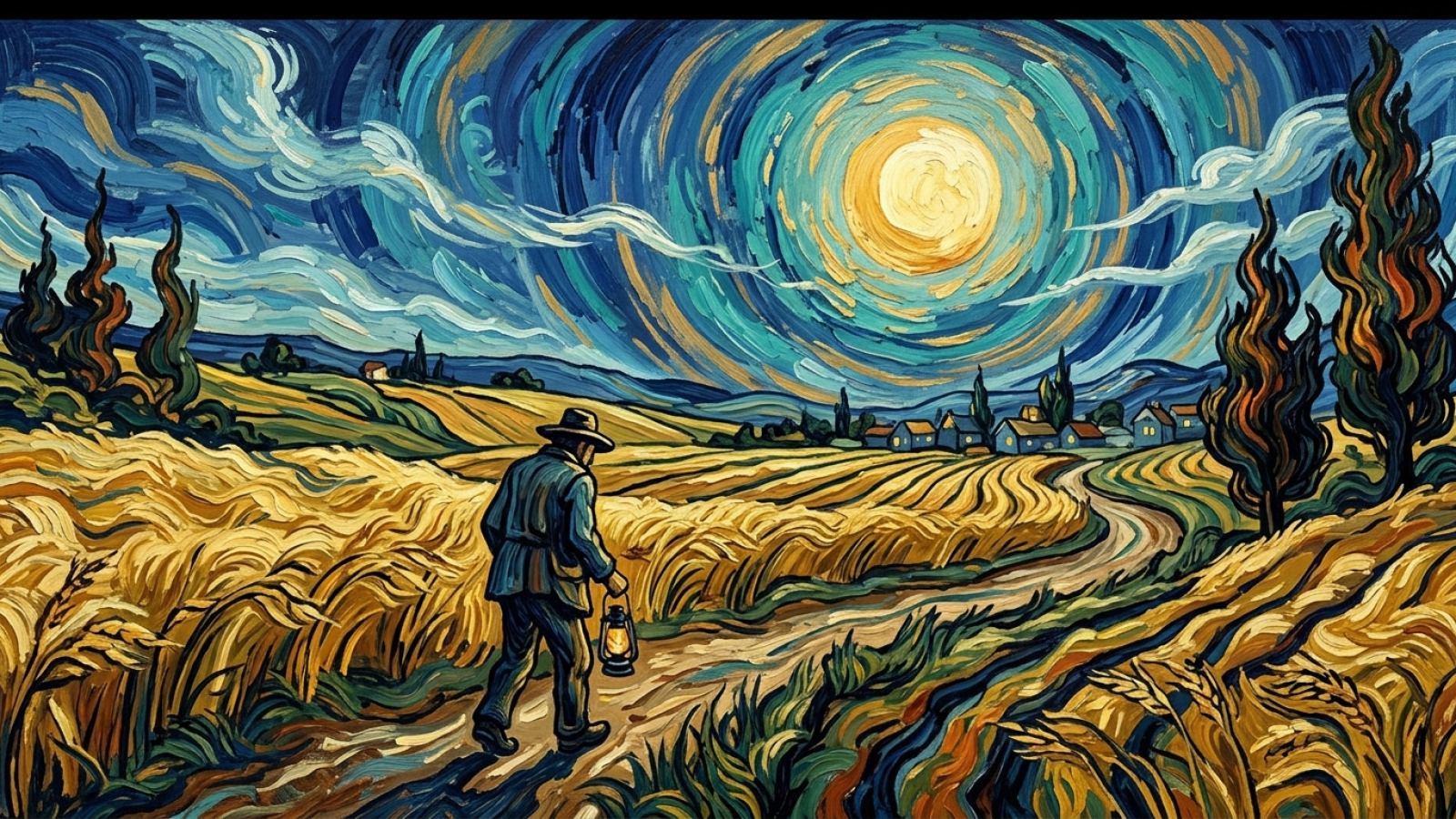
There are films about artists, and then there is Loving Vincent (2017), a singular cinematic achievement that doesn’t merely depict its subject but utterly embodies him. This is not a film that uses Van Gogh’s paintings as set dressing; it is, in every one of its 65,000 frames, an oil painting crafted by hand in the precise manner of Vincent van Gogh. The recursion here is profound and self-referential: a film about a painter, visually rendered as if it were a lost series of paintings by the artist himself, starring characters lifted directly from his canvases.
The Brushstroke as Narrative
The premise alone is astonishing: a narrative feature composed entirely of individually oil-painted frames, created by a team of over 100 artists, each trained to mimic Van Gogh's expressive impasto. The result is a motion picture where the visual medium itself becomes the primary storytelling device, a living, breathing artwork that explores the final days of a tormented genius. Imagine standing in the Musées d'Orsay, admiring Starry Night Over the Rhône, and then witnessing the waters ripple, the stars pulse, and the figures stir into motion—that’s the experience of Loving Vincent. The familiar, swirling brushstrokes that define Van Gogh’s landscapes and portraits are not just an aesthetic choice; they are the fabric of the film's world, creating an immersive, empathetic connection to the artist’s unique perception. It's an unprecedented commitment to artistic method, transforming the very act of cinematic viewing into an encounter with painting itself, where the film’s narrative investigation into Van Gogh’s death is inseparable from its painterly execution.
The artists painstakingly recreated over 120 of Van Gogh's actual paintings, weaving them into the narrative and setting. From the stark yellow of The Yellow House to the melancholic depths of Wheatfield with Crows, these iconic images are not static backdrops but dynamic environments that evolve with the story. The vibrant, almost frantic energy of Van Gogh's original work translates seamlessly to the screen, each frame a testament to the collective skill and dedication of the artists who brought this vision to life. This isn't just art referencing art; it's art becoming art, a grand illusion where the canvas itself moves, guiding the viewer deeper into the emotional landscape of its subject.
Figures on a Canvas, Characters on Screen
What truly elevates Loving Vincent beyond a technical marvel is its daring choice to populate its story with characters directly drawn from Van Gogh's oeuvre. Armand Roulin, the film’s protagonist, is the son of Joseph Roulin, the postman who was one of Van Gogh’s most frequent models. Both appear as they do in Van Gogh's celebrated portraits, their features, clothing, and even their postures retaining the distinct qualities of their painted origins. Dr. Gachet, Père Tanguy, and even Marguerite Gachet, all familiar faces from Van Gogh’s canvases, become active participants in the unfolding mystery. This specific layer of recursion—bringing painted figures to life as actors in a painted film about their painter—is what makes the project so compelling. It's as if the characters have stepped out of their static frames to tell their own story, granting them agency within the very style that captured their likeness. It humanizes the art and art history, allowing viewers to see past the myth of the tortured artist and engage with the people who orbited his tumultuous life.
This approach transforms a biographical investigation into a deeply personal quest, seen through the eyes of those who knew him, rendered in the visual language he himself created. The filmmakers didn't just animate paintings; they animated the very essence of Van Gogh's subjects, imbuing them with personalities that resonate with the subtle narratives often hinted at in his portraits. The choices of color, light, and perspective that once defined these individuals on canvas now define their emotional states and interactions on screen, creating a profound synthesis of visual art and storytelling.
Loving Vincent stands as a powerful testament to the enduring resonance of Van Gogh’s vision and the boundless possibilities of cinematic art. It’s a film that doesn't just ask us to look at art, but to inhabit it, to experience the world through the vibrant, unsettling, and ultimately human lens of its creator. It pushes the boundaries of biographical storytelling by merging form and content so completely that the film itself becomes an extension of the artist's canvas, inviting us to walk among the brushstrokes and breathe the air of his unique, luminous world.
